How to Brew the Perfect Pour-Over at Home
Pour-over coffee is the simplest way to unlock the full flavor of a great bean. Unlike immersion methods that steep all the grounds at once, a pour-over lets you control the flow of water through the coffee bed, extracting sweetness, acidity, and body in a deliberate, repeatable way. It is the method our baristas use most at Ki'bok Coffee in San Miguel de Allende, and it is the method we recommend for anyone who wants to taste the difference that specialty coffee brewing makes at home.
This guide walks you through a complete step by step pour over coffee recipe that works with a Hario V60, Kalita Wave, or any cone-shaped dripper. We will cover ratios, grind size, water temperature, pouring technique, and the common mistakes that trip up beginners.
What Do You Need to Make Pour-Over Coffee?
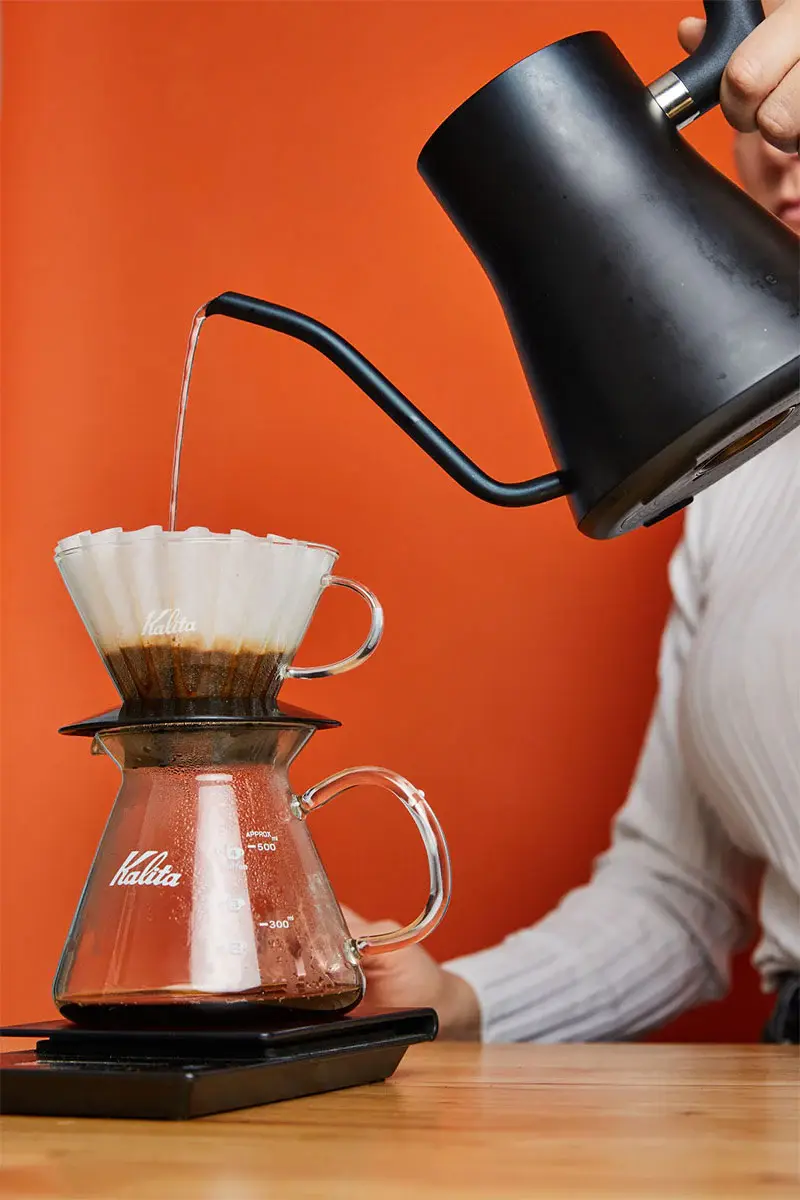
To make pour-over coffee at home, you need five things: a pour-over dripper, paper filters, a gooseneck kettle, a kitchen scale, and freshly roasted whole-bean coffee. A burr grinder is strongly recommended since pre-ground coffee loses aromatic compounds within minutes of grinding.
Essential Equipment
- Dripper:Hario V60 (size 02), Kalita Wave 185, or Origami dripper. The V60's single large drain hole gives you more control over flow rate; the Kalita's flat bottom is more forgiving for beginners.
- Filters:Use the manufacturer's recommended paper filters. Tabbed Kalita filters for the Wave, Hario conical filters for the V60.
- Gooseneck kettle: The narrow spout lets you pour in a slow, controlled stream. Electric models with temperature hold (like the Fellow Stagg EKG) are ideal.
- Scale: Any kitchen scale accurate to 0.1g works. A built-in timer is convenient but not required.
- Grinder: A conical or flat burr grinder. The Baratza Encore or Timemore C2 are excellent entry-level options.
What Is the Best Pour-Over Coffee Ratio?
The best pour-over coffee ratio for most specialty beans is 1:16, meaning 1 gram of coffee to 16 grams of water. For a single cup, that translates to 15g of coffee and 240g of water. This ratio produces a balanced, flavorful cup that highlights origin characteristics without over- or under-extracting.
Pour-Over Ratio Reference
| Serving | Coffee | Water | Ratio |
|---|---|---|---|
| 1 cup (8 oz) | 15g | 240g | 1:16 |
| Large cup (12 oz) | 22g | 352g | 1:16 |
| Two cups | 30g | 480g | 1:16 |
| Stronger brew | 15g | 210g | 1:14 |
If you prefer a stronger cup, try a 1:14 ratio. For lighter, more tea-like brews, go to 1:17. Small adjustments of one gram of coffee can shift the flavor noticeably, so keep notes on what you like.
How Do You Make Pour-Over Coffee Step by Step?
Follow this step by step pour over coffee method for a consistent, delicious brew every time. The total brew time should land between 2:30 and 3:30, depending on your grind size and pouring speed. This is the same V60 recipe our baristas use at Ki'bok.
Step 1: Heat Your Water
Bring water to 93–96°C (200–205°F). If you don't have a thermometer, bring water to a full boil and let it rest for 30 seconds. Water that is too hot will scorch the coffee and emphasize bitterness; water that is too cool will under-extract and taste sour.
Step 2: Grind Your Coffee
Grind 15g of coffee to a medium-fine consistency, roughly the texture of table salt. For the V60, err slightly finer; for the Kalita Wave, go slightly coarser. If your brew drains too fast (under 2:30), grind finer. If it stalls past 3:30, grind coarser.
Step 3: Rinse the Filter
Place the filter in your dripper, set it on your mug or carafe, and pour hot water through the filter until it is fully saturated. Discard the rinse water. This removes paper taste and preheats your brewing vessel, which keeps the slurry temperature stable throughout the brew.
Step 4: Bloom (0:00 – 0:45)
Add the ground coffee to the filter and gently shake to level the bed. Start your timer and pour 30–45g of water in a slow spiral, starting from the center and working outward. You will see the coffee bed swell and bubble as CO2 escapes. This is the bloom, and it is essential. Fresh coffee releases more gas, which is why beans roasted within the last 7–21 days perform best. Let the bloom sit until 0:45.
Step 5: Main Pour (0:45 – 2:00)
At 0:45, begin your main pour. Pour in slow, concentric circles from the center outward, keeping the stream thin and steady. Avoid pouring directly onto the filter walls, which lets water bypass the coffee bed and results in under-extraction. Pour in two or three stages: add water to about two-thirds full, let it draw down slightly, then pour again. Aim to reach your target weight of 240g by the 2:00 mark.
Step 6: Drawdown (2:00 – 3:00)
After your final pour, let the water drain through the coffee bed. The bed should draw down evenly. If you see a flat, uniform layer of spent grounds at the end, your technique and grind are dialed in. A sloped or cratered bed suggests uneven pouring. Total brew time should fall between 2:30 and 3:30. Remove the dripper, give your cup a gentle swirl to mix, and taste.
What Are Common Pour-Over Mistakes Beginners Make?
The most common pour-over mistakes beginners make are using stale coffee, inconsistent grind size, and pouring too fast. Here is a quick troubleshooting guide for the most frequent issues.
| Problem | Likely Cause | Fix |
|---|---|---|
| Sour, thin taste | Under-extraction | Grind finer or increase water temp |
| Bitter, harsh taste | Over-extraction | Grind coarser or lower water temp |
| Weak, watery cup | Too little coffee | Use a 1:15 or 1:14 ratio |
| Brew drains too fast | Grind too coarse | Grind 2–3 clicks finer |
| Brew stalls / clogs | Grind too fine or fines clogging | Grind coarser; consider a better grinder |
What Is the Best Pour-Over Technique for Beginners?
The best pour-over technique for beginners is to keep it simple: use a Kalita Wave for its flat-bottom forgiveness, start with a 1:16 ratio, and focus on a slow, steady pour from the center outward. Don't chase perfection on your first cup. Instead, change one variable at a time (grind size, then water temperature, then pour speed) and taste the difference each adjustment makes.
If you want to see these techniques in person, visit us at Ki'bok on Diez de Sollano y Dávalos in San Miguel de Allende. Our baristas are happy to walk you through a brew and help you find the grind and ratio that match your taste. You can also explore our menu to try different single origin coffees brewed by pour-over before committing to a bag for home.
“Pour-over is not about ritual for its own sake. It is about paying attention, and attention is how good coffee becomes great coffee.”
Frequently Asked Questions
How long should a pour-over take?
A single-cup pour-over (15g coffee, 240g water) should take between 2 minutes 30 seconds and 3 minutes 30 seconds from the first pour to the last drip. If it finishes faster, your grind is too coarse. If it takes longer, your grind is too fine.
Can I use pre-ground coffee for pour-over?
You can, but the results will be noticeably less aromatic and complex. Coffee begins losing volatile compounds within 15 minutes of grinding. For the best home coffee brewing experience, grind whole beans immediately before brewing.
What is the difference between V60 and Kalita Wave?
The Hario V60 has a single large drain hole and spiral ridges that give the brewer more control over flow rate, but are less forgiving of technique errors. The Kalita Wave has a flat bottom with three small drain holes, which creates a more even extraction and is better for beginners. Both can produce excellent cups.
Does water quality matter for pour-over coffee?
Yes. Coffee is about 98.5% water, so the mineral content of your water directly affects extraction and taste. Avoid distilled water (too flat) and very hard water (too mineral-forward). Filtered tap water or water with a TDS of 75–150 ppm produces the best results for specialty coffee brewing.
Learn to Brew With Us
Visit Ki'bok in San Miguel de Allende and watch our baristas brew pour-over with single origin Mexican beans. Take a bag home and practice.
Plan Your Visit